|
Travel to Athens
|
 |
| Athens Tour |
Athens is the capital of Greece. It is located in the prefecture of Attica in the Central Greece region and has a population of 5.000.000 residents.
Searching for Attica on a map, we discover its triangular geophysical bas-relief stretching out to the western Aegean. It’s the southernmost part of Mainland Greece surrounded by the Saronic, the Euboean and the Corinthian gulfs. Athens is located at the southern tip, known as the Attica plain. The Athenian plain alongside the other two, form the peninsula of Attica.
The Athens plain is the southernmost, the largest and the most beautiful of the other two. It’s the most important as well, due to its exceptional position. The plain is surrounded by low mountains and hills. These mountains are Ymittos, Pendeli, Parnitha and Egaleo. To the south, the plain is open and extends towards the sea, forming the many indented beaches of the Saronic Gulf.
Parnitha
Parnitha is the tallest of the mountains that surround Athens, standing 1,413 meters tall. It’s covered with tall pine trees giving it an imposing and engaging atmosphere.
A winding road goes all the way to the top of the mountain where a shelter for hikers is located, whereas on the right summit of Parnitha there’s a casino.
Ymittos
Ymittos is the other mountain of Athens, 1,206 meters tall. The Ancients used to call it filled with herbs due to the countless varieties of aromatic herbs found there. The renowned aromatic honey of Ymittos also originates there.
Pendeli
Pendeli is located northeast of Athens, 20 km from the city. It’s 1,109 meters tall.
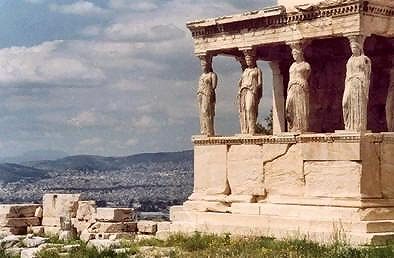
The mountain is known for the high quality marble it produces. This marble was used to decorate the immortal monuments of Athens such as the Parthenon, the Caryatids, Thissio etc..
Egaleo
Another mountain of Athens is Egaleo. It’s rocky, stands 450 meters tall and is located 4 km from the city. It has a northeast to southwest orientation starting from mount Parnitha and extending towards the sea, right across Salamina island.
Egaleo is a mountain of historical significance, from where Xerxes (the Persian invader) observed the destruction of his fleet in Salamina bay by the Athenians.
Apart from these mountains, the Athens plain includes Tourkovounia (338 meters), Lycabettus hill (277 meters) and the sacred rock of the Acropolis (156 meters). This series of hills separates the Athens plain into two parts. The western part - which is the largest - and the eastern part.
Lycabettus is located right at the center of Athens. Covered with trees, while at the summit there’s the little church of St. George (magnificent view of the city). There are, however, more hills inside Athens. Arditos (133 meters) just above the Panathenian Stadium, where during ancient times the judges of Iliea would take their oath. The hill of Philopappou (147 meters), the hill of the Nymphs (104 meters), where the city’s observatory is located, just above Thissio the hill of Pnyka (109) and many other smaller hills. Among these, one can easily discern the hill which signified the glory not only of Athens but of the entire Greek world and became the heart and light of the ancient world. The sacred rock of the Acropolis! It is inside this particular area of the plain where Athens developed and evolved. So much in fact that it is now connected to the city of Piraeus and the suburbs.
Weather
The topographic conditions we mentioned, cause the Athens weather to be mild and healthy, unlike what we would typically expect from a city surrounded by water. As a matter of fact, Athens has the driest climate not only of Greece but Europe as well.
The clear light-blue sky, one of the city’s trademarks, is owed to the lack of high humidity levels. The transparency and glow of the Athenian sky and of the entire Attica plain is a phenomenon unique on this planet.
Each season has pronounced characteristics, making the succession of seasons quite noticeable.
Spring is relatively short, heralded by a somewhat chilly March, getting progressively warmer in April and May. In other words, summer begins early and is hot. July is the summer’s driest month, which continues up to and includes October.
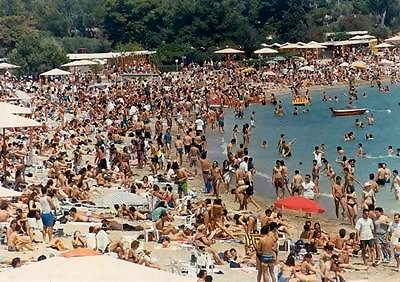
photo: Prisma – Nikolaidis
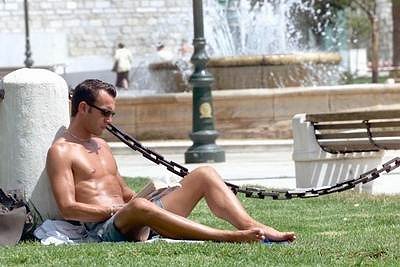
The sunshine of Attica and the pleasant weather, offer the opportunity to the countless visitors of Athens to enjoy the city during any given season. Apart from the city and the numerous things one can admire, there’s always the option of escaping to the outdoors, be it mountain or sea. Distances are relatively short and the variation of the landscape will excite you (we suggest Parnitha, Lycabettus, Glyfada and Sounio.)
History
Concerning the etymology of the word Athens, there are many versions. It is said that it comes from the verb thao which means breast-fed, because it was in this way that the ancient world was spiritually fed. Others suggest that it comes from athos which for the ancients meant bloom (anthos) for its beautiful climate and fruitful earth and because it was the flower of Greek cities. Thus, the word Athens can be explained as blooming or fruitful. Most, however, suggest that the city took the name Athens, according to mythology, because of the (battle) competition between Athena and Poseidon. These two gods quarreled as to who would be the patron of the city. To solve their differences, they agreed that the patron would be the one who would offer the best gift to the city. Poseidon struck the rock of the Acropolis with his trident and from this blow, a stream source of salt water was created. The goddess Athena offered an olive tree to its inhabitants! The other gods who were present as judges during the competition, gave the victory to Athena. Thus, the city was named Athens. The Athenians, to appease Poseidon, dedicated an imposing temple to him at the southeastern edge of Attica known as Sounio.
Attica is also bound to two more ancient gods. To Dionysus the god of vegetation, wine and drunkenness. The gift of this god to his loved city Athens was the vineyard. In his honor they celebrated the Dionysian rites in Attica in wild revelry. Dances, abundant wine, processions. From the plays which were held during the ceremonies, tragedy and comedy were born. Also, the goddess Demetra and her daughter Persephone who was abducted by Hades to become his wife. During the wanderings of the goddess to find her daughter she was given hospitality at the house of Keleous, King of Elefsina. In order to thank him, she taught the inhabitants of Elefsina the farming of the land and the Elefsinian mysteries.
|

6th century B.C.
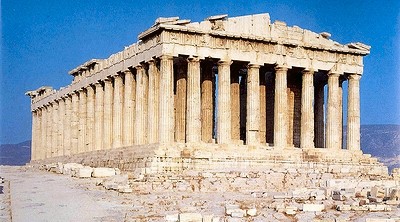
The law-making work of Solon, ensured order in Athens. While Peisistratos a nobleman, and an ambitious Athenian, managed to take the Acropolis and become master of the state. He governed Athens with Solon’s laws (constitution) as his guide. He built the temple of Olympian Zeus, organized the Pan-Athenian games and made Athens one of the greatest cities of that time. The fifth century B.C. is the most glorious in Athenian history. In the fifty years 479-431 B.C. which followed the end of the Persian Wars, with victory, Athenian democracy was completed with Pericles’ reforms. Every citizen was a responsible member of the whole. Democracy means the state of the demos (people) that is, the majority of the people decide. The equal rights of the citizens also enabled the arts and letters to flourish. The contribution of Athens to political and cultural domains from the basis of European civilization. The phrase the Golden Age of Pericles summarizes the work of this great leader. Pericles, together with the sculptor Pheidias and the architects Ictinos and Kallicrates, whose happy coexistence performed miracles. One of the first is the Parthenon. The Erectheion and the Thissio follow, as well as the gates and a little further the temple of Poseidon at Sounio, the temple of Nemesis at Ramnounda and Aries (Mars) at Acharnes. The Athens of Pericles is the greatest miracle in the history of the world.
In the 4th century B.C. we find great artists, orators, philosophers and generals. It is the age of Plato, Xenophon, Praxiteles, Demosthenes and Lycurgus. The Pnyka becomes the cradle of democracy, Plato founds his Academy and Aristophanes raises Greek philosophy to its absolute.
|
The Macedonians were the first who managed to capture Athens and to unite all the Greeks under their rule. Alexander the Great, a little later, honoured Athens and sent the shields of victory from the Granicus river to be placed in the Parthenon.
In the time of Alexander’s heirs, Athens sometimes loses and sometimes regains its independence. But this constant civil rife gave an excuse to the new world power, Rome, to intervene in Greek affairs. The Romans captured Athens demonstrating an apparent friendship. Thousands of statues and other works of art were taken from Athens to Rome.
|
|
In the middle of the 5th century the building of churches in Athens, begins and many ancient temples are converted to Christian ones. The destruction of these ancient monuments was in many cases proof of the faith of the newly-converted Christians.
|
Athens has changed a lot today. It is a city of 5.000.000 inhabitants, modern, with tremendous growth, vibrant and hiding many surprises for the visitor. Certainly, however, it incites foremost one’s interest as the representation of all periods of Greek history in one place. The visitor to Athens, among other things, can see the sights and the archaeological remains and mentally travel back to the glorious past of the city.
Worth Seeing
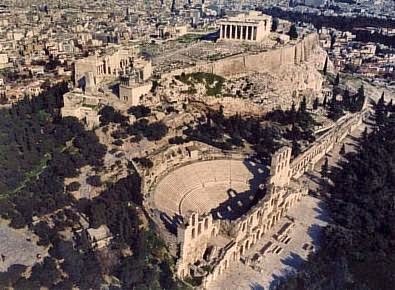
- The Acropolis. Where the Parthenon dominates, which is one of the most important archaeological sites in the world because of its history and the high quality of its architecture. The Acropolis suffered great damage during Venetian and Turkish assaults.
- The Ancient Agora. Located below the sacred rock of the Acropolis. Was the public gathering place of old Athens.
- Areios Pagos. Where the judicial body of the Areios Pagos convened. In other words, the supreme court of the city. The entire hill was considered sacred and was dedicated to the god Aries.
- The theatre of Dionysus. Where the art of drama was established. Plays by Aeschylus, Sophocles, Euripides, Aristophanes were first performed there.
- The theatre of Herodius - Atticus. World-renowned theatre, since it is being used at the present day for musical, dance and theatrical events.
- The ancient site of Keramikos. Where the ancient cemetery of Athens is located.
- The hill of Philoppapou. Where the monument of the same name is located. This place offers a great view of the Acropolis. Pnyka is also located there, the place where the demos’ (peoples’) church would convene. In essence, Pnyka is the birthplace of democracy.
- The Roman Agora
- Adrian’s Arch. On Amalias avenue.
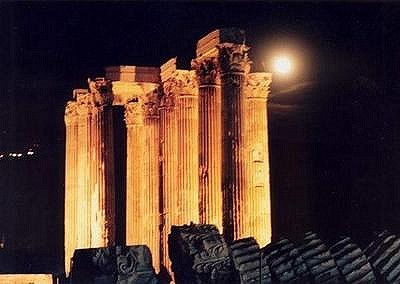
photo: Eleni Grigoriadou
- The Acropolis museum. With priceless works of art. It is considered one of the most extraodinary in the world.
- The National Archaeological Museum. On Patission avenue. It includes exhibits from all the periods of Ancient Greek art.
- The Byzantine Museum. Located on Vassilissis Sofias 22.
- Stoa of Attalus Museum
- The Benaki Museum
- The National Library
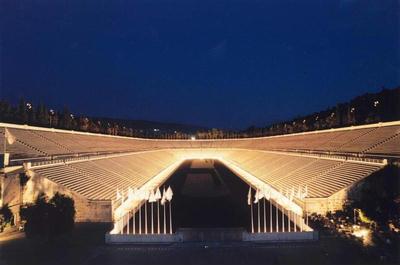
photo: Omega Press Zouliatis
- The Kallimarmaro Panathenian Stadium. This is where the first modern Olympics took place in 1896.
- Lycabettus hill. Both during the day and night.
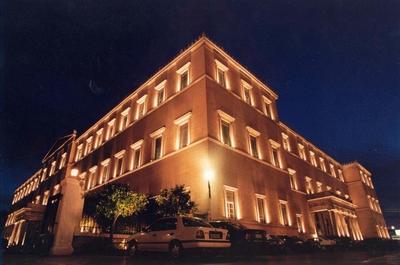
photo: Omega Press Zouliatis
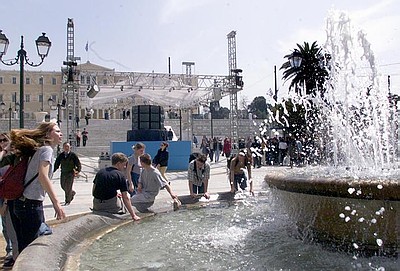
- Syntagma (Constitution) Square. Where the old palace, now the Parliament, is located.
- The National Garden and Zappio
- Kolonaki. Old aristocratic Athenian neighbourhood good for shopping and cafes.
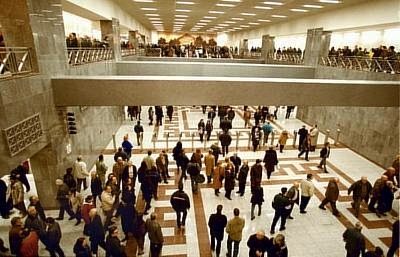
- The Attica Metro (Subway). Among the most state-of-the-art in the world. The Syntagma station is noteworthy, where numerous archaeological discoveries are exhibited, found during its construction.
- Plaka. The most touristic site of Athens. The old city. Picturesque Plaka which preserves the traditional nuances of another time, with cafes, taverns and folk-art shops.
- Byzantine period monuments: The most important monuments preserved to this day are the temple of Agion Theodoron beside Stadiou avenue, Kapnikarea (Ermou ave.), Agiee Apostolee (11th century), Sotiria Lykodemou (11th century), Agios Nikolaos Ragavas (11th century).
- Thissio in the afternoon and at night.

photo: Eleni Grigoridaou
The athenian nightlife has many surprises in store. It’s a city that doesn’t go to sleep early. You have a choice among quaint taverns with Greek cuisine, fine restaurants, thousands of clubs, bars, cinemas, events, concerts, in areas such as Thissio, Gazi, Psirri, Kolonaki, Glyfada, Kifissia etc.
|
|