|
Travel to Volos
|
 |
| Volos Tour |
The prefecture of Magnesia is located centrally in Greece, in the region of Thessaly along the Aegean coastline. It is an industrially developed area and that is attributed, primarily, to the port of Volos, which is a major commercial center.
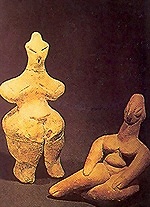
Magnesia, according to archaeological findings was inhabited during the Mesolithic era. Of great importance are the settlements that were found in the village of Sesclo (5 km from Volos) and Dimini. The settlement of Sesclo dates back to 6,000 B.C. and is the most ancient of all in Europe.
According to Ancient Greek mythology, the slopes of mount Pilio (or Pelion) were inhabited by the Centaurs, who were half human, half animal with a horse’s body. The best-known of the Centaurs was Chiron. He was a doctor, a sage and a mentor to mythological heroes such as Achilles and Asclepius.
|

Volos
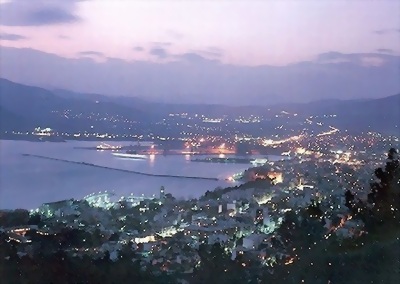
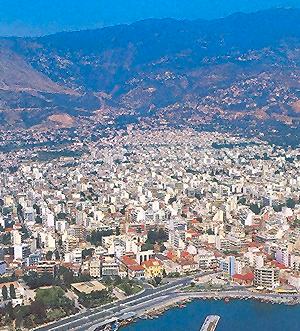
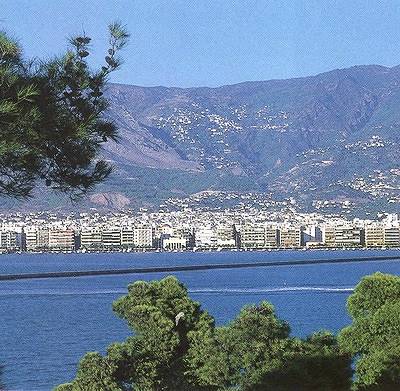
Volos is the capital of the prefecture of Magnesia. The city is built in the center of the Pagasitic Gulf and the foot of mount Pilio (Pelion.) Its unique geographic location offers the visitor a majestic view and a pleasant climate. Volos has approximately 170,000 inhabitants and is the prefecture’s administrative center. It is the legendary city-state of Iolkos, capital of Mycanaeic Thessaly, where the famous mythological Argonautic expedition began, with Jason and the Argonauts and his ship named “Argo” (which today is the emblem of the port of Volos).
Volos is named after the village of Volos, also known as Golos. It is an old village that is located in the area which is nowadays known as Ano (Upper) Volos, located at the foot of mount Pilio. Ano Volos is criss-crossed by two small rivers. Anavros and Krafsidonas. The name of the old village after which Volos was named, has many different roots. Some say that it is an alteration of “Iolkos” and others claim that it originates from Folos, who according to mythology was a wealthy landlord of the region. Volos’ development from the 17th century onward, is attributed, apart from its natural beauty, primarily to the port. It is from this port that all the renowned products in Pilio were exported (which in addition to produce, included fabrics, since the Pilians were among the best in the making of wool.) Constantinople (now known as Istanbul), Venice and many German cities would “fight” to obtain Pilian products (wine and woven goods in particular.)
Present day Volos, is flourishing commercially and is culturally vibrant. The city, destroyed by the 1955 earthquake, however, was rebuilt, retaining all of its splendour and beauty.
|
Worth Visiting
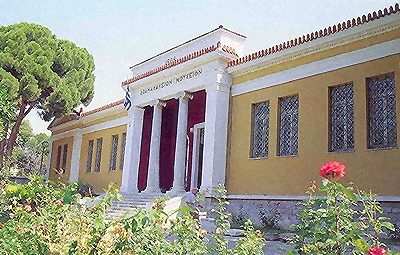
- The Archaeological Museum. It is here that significant finds of Thessaly are kept, from Ancient as well as... pre-historic times.
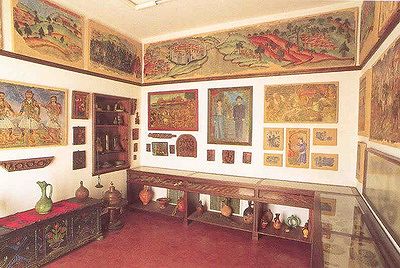
photo: M. Pornalis
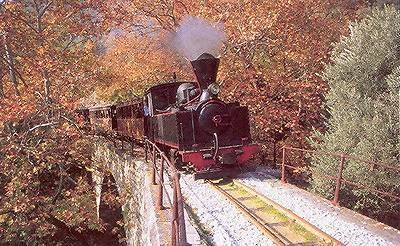
photo: M. Pornalis
- The Museum of Fine Arts. Includes important works of modern Greek artists.
- The residence of folk-artist Kitsos Makris, where one finds the works of folk artist Theofilos.
- The small train of Volos which was reinstated and travels all the way to the village of Milies of Pilio.
- The world renowned “tsipouradika” (where a locally produced spirit is served, which has an extremely high alcohol content)
- Volos beach
- The Madonna of Goritsa, where one can enjoy a panoramic view of the city.
- Alykes and Pefkakia. Besides being holiday resorts, it is where practically all the night clubs of Volos are located here.
- Palia (Old). The old city "by night."
- The Ancient Theatre of Dimitriada
- The church of St. Constantine (on the beach)
- [Mount] Pilio (or Pelion)
- The islands of Skiathos, Skopelos and Alonissos.
|
|